





Litigation, Democracy, and the Expanding Work of Civil Rights Leadership
The first quarter of 2026 made one thing unmistakably clear: civil rights work is being tested on multiple fronts at once.
From January through March, the landscape demanded more than legal response alone. It required litigation, policy advocacy, public education, and narrative clarity operating together. For those of us working across civil rights, law, and democracy, this was a quarter defined by urgency, complexity, and the need for institutions that can both respond and lead.
At the Lawyers’ Committee for Civil Rights Under Law, that meant continuing to show up across courtrooms, public conversations, and advocacy spaces with a clear understanding that legal strategy does not live in isolation. It is connected to public understanding, democratic accountability, and the long-term work of protecting rights in practice.
What stood out from January through March
What stood out most this quarter was how closely connected the fights remain.
Democracy and voting rights stayed central. Across the quarter, the work reflected continued efforts to confront voter suppression, defend democratic participation, and respond to policy and legal threats that undermine public trust and access.
At the same time, January through March showed how attacks on equity continue to move through multiple channels at once. From litigation and amicus advocacy to public education and rapid response, this moment continues to demand legal rigor alongside strategic clarity.
The quarter also reinforced a broader truth: public narrative is not separate from legal work. It is part of the terrain. Civil rights institutions today must not only litigate, but help the public interpret the moment clearly, responsibly, and with historical context.
In the press
Our press work this quarter reflected that urgency and breadth.
From January through March, our public statements and press releases addressed a wide range of developments, including voting rights, anti-DEI litigation, public accountability, immigration-related concerns, democracy threats, and key moments in the national conversation.
January-March 2026 press releases
January
- Jan. 6 — Lawyers’ Committee for Civil Rights Welcomes New Chief Development Officer Salena Jegede
- Jan. 7 — Lawyers’ Committee Calls for Accountability After Fatal ICE Shooting in Minneapolis
- Jan. 25 — Lawyers’ Committee Condemns Killing of Alex Jeffrey Pretti and Demands Accountability in Minneapolis
- Jan. 26 — Legacy Civil Rights Leaders Demand Senate Vote NO on ICE and DHS Enforcement Operation Funding Amid Federal Lawlessness and Deadly Abuses in Minnesota
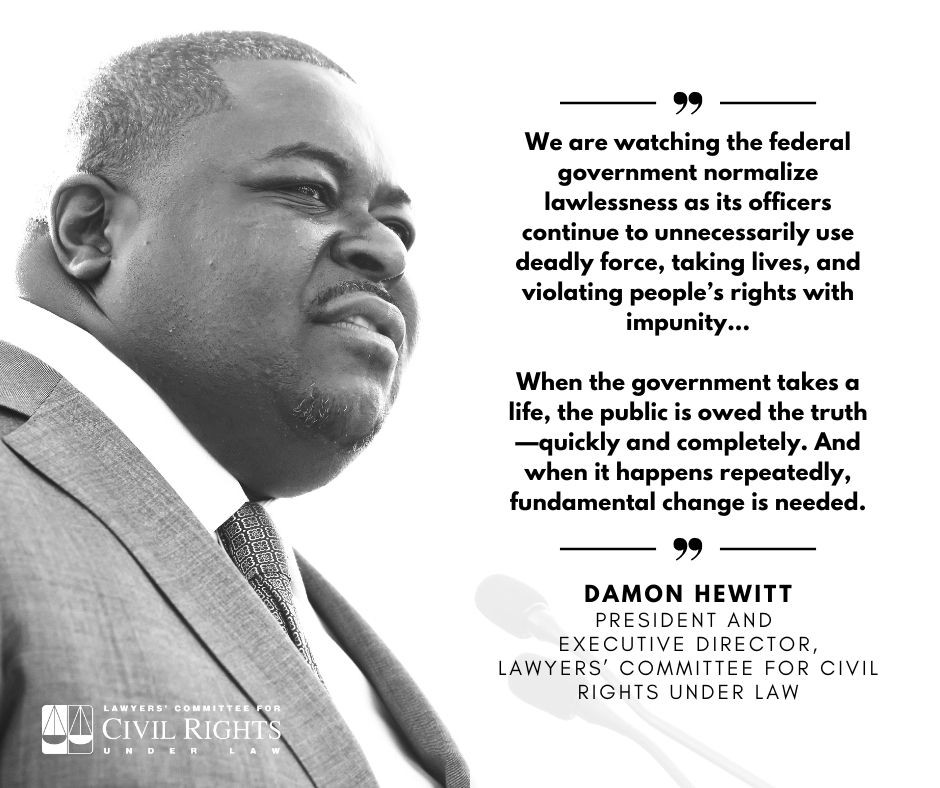
- Jan. 30 — Statement from Lawyers’ Committee for Civil Rights President and Executive Director Damon T. Hewitt
- Jan. 30 — Lawyers’ Committee and Partners File Amicus Brief in Support of Hispanic Scholarship Fund in Section 1981 Case
February
- Feb. 6 — Lawyers’ Committee Statement Condemning Trump’s Racist Video of the Obamas
- Feb. 11 — Statement from the Lawyers’ Committee for Civil Rights Under Law on Pam Bondi’s Testimony to Congress
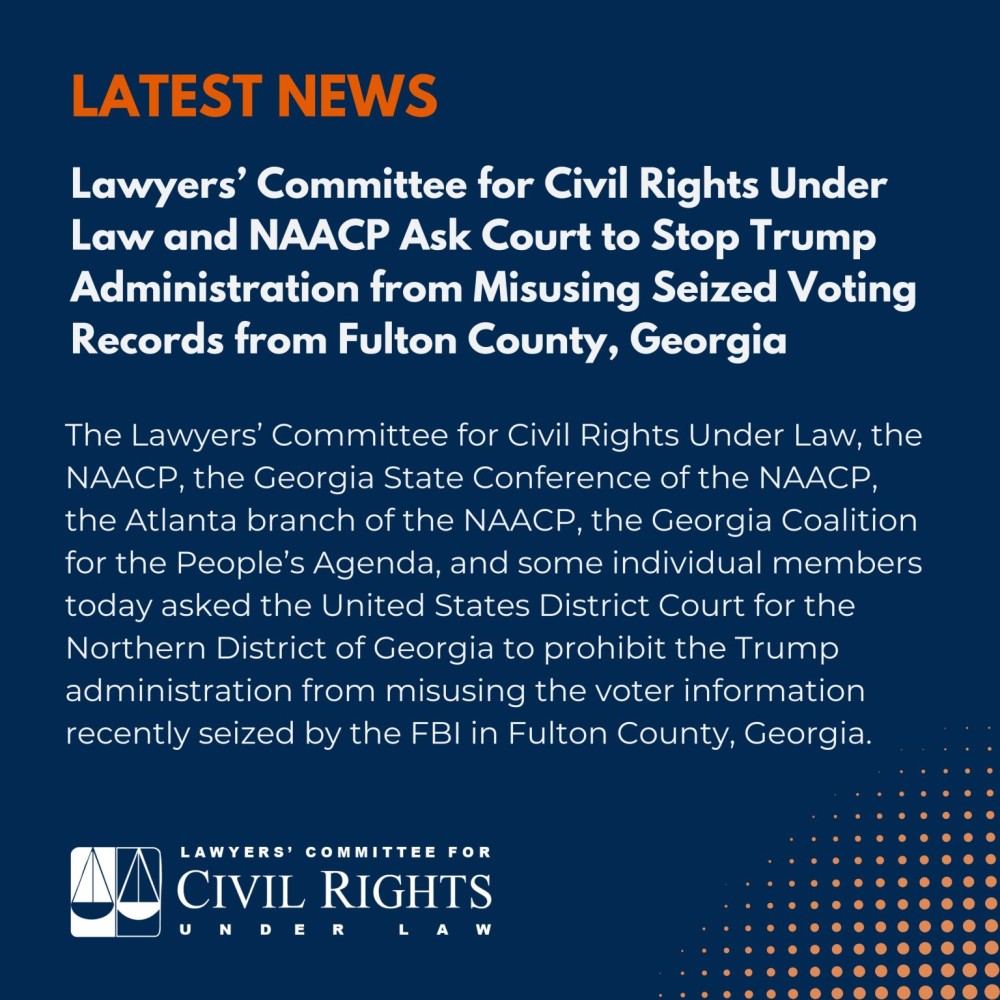
- Feb. 15 — Lawyers’ Committee for Civil Rights Under Law and NAACP Ask Court to Stop Trump Administration from Misusing Seized Voting Records from Fulton County, Georgia
- Feb. 17 — Lawyers’ Committee for Civil Rights Under Law Mourns Rev. Jesse Jackson
- Feb. 24 — Statement from the Lawyers’ Committee for Civil Rights Under Law on President Trump’s State of the Union Speech
- Feb. 26 — Civil Rights Groups Urge the Supreme Court to Strike Down Trump’s Birthright Citizenship Executive Order
March
- Mar. 17 — Statement from Lawyers’ Committee on the SAVE America Act
- Mar. 24 — Federal Court Delivers Major Victory for Trafficking Survivors, Halting Anti-DEI Executive Orders and Harmful DOJ Funding Conditions
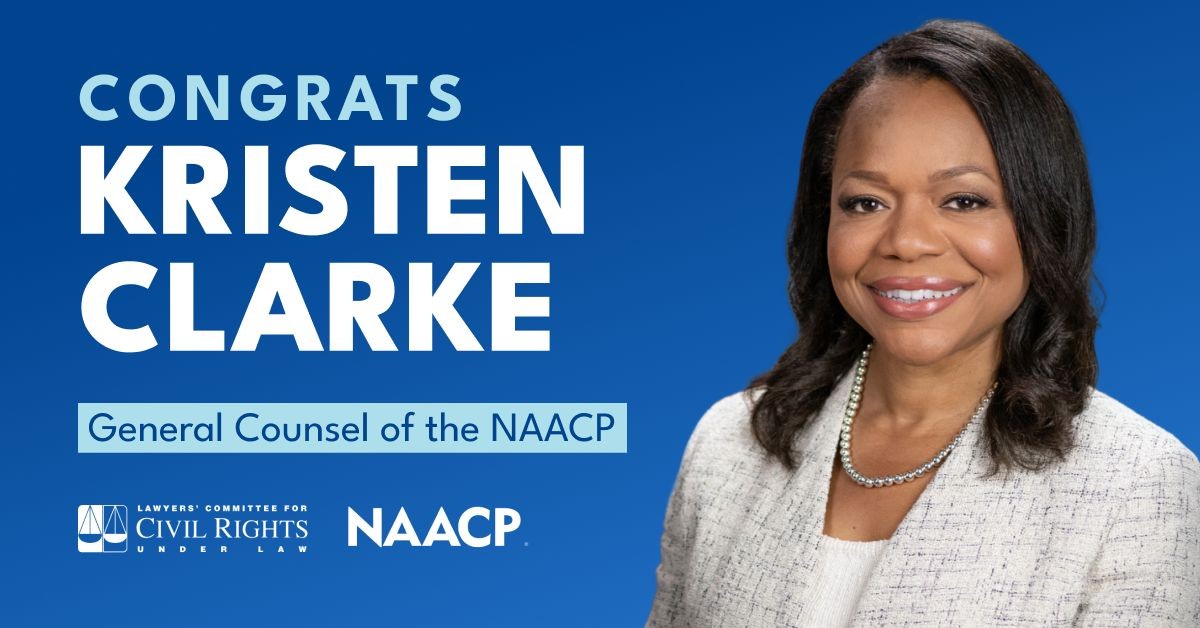
- Mar. 25 — Lawyers’ Committee Congratulates Kristen Clarke on her Appointment as General Counsel of the NAACP
- Mar. 31 — Statement from Lawyers’ Committee for Civil Rights Under Law on Decision Ruling Trump Can be Held Accountable for January 6 Insurrection
- Mar. 31 — Lawyers’ Committee for Civil Rights Under Law Denounces Trump Executive Order Threatening Voting Rights
Beyond the press hits
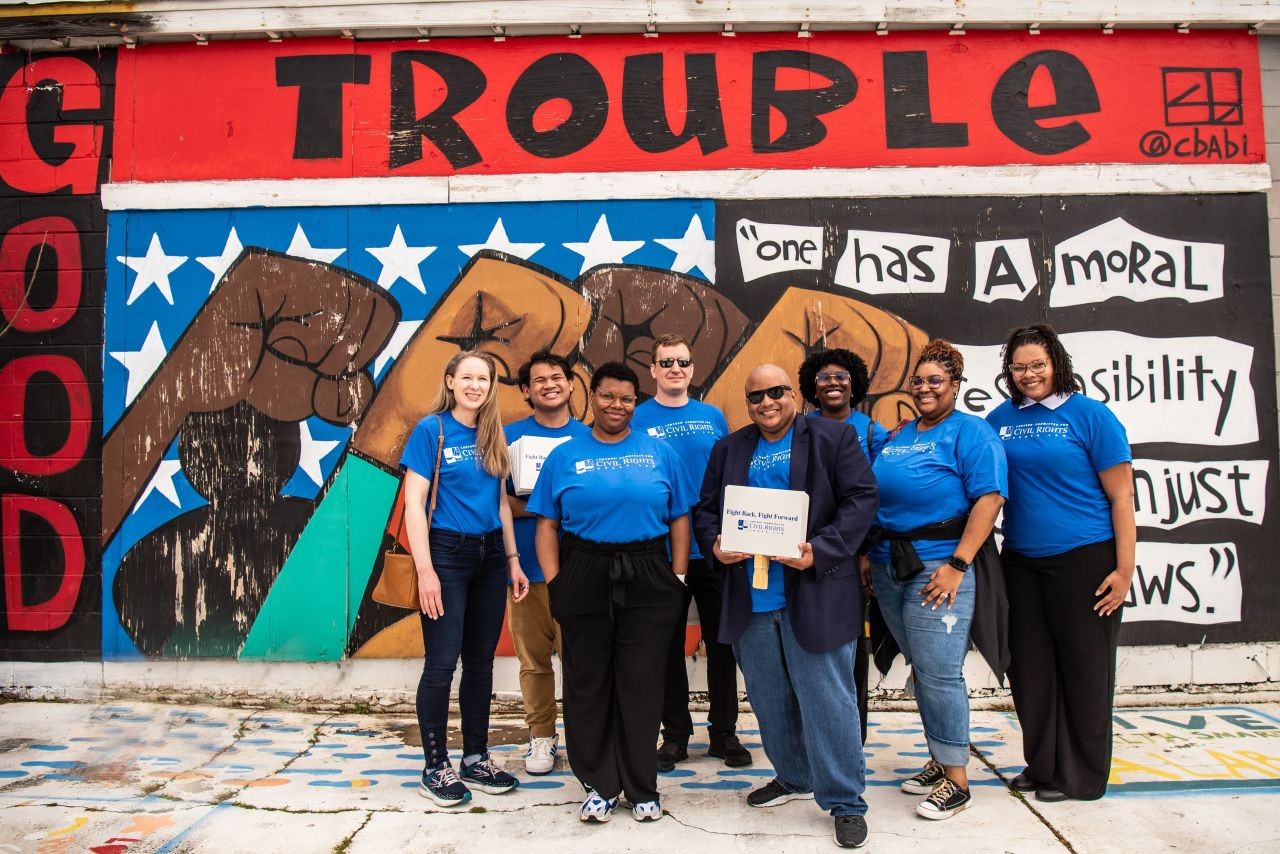
This first quarter of 2026 was also about building stronger public-facing resources that help people go deeper into the issues shaping this moment.
Over the course of the quarter, we launched and elevated several digital resources designed to make our work more accessible, timely, and useful to the general public:
- Investigating ICE’s Use of Mobile Fortify: A new page exploring the reported use of facial recognition and data-search technology by ICE in the field.
- Protecting Voters’ Private Information from Federal Misuse A case hub tracking efforts to stop the misuse of sensitive voting records seized in Fulton County, Georgia.
- Photo Highlights from the 2026 Selma Bridge Crossing A visual look at this year’s Selma Jubilee commemoration.
- Amicus Briefs Hub A central home for our 2026 amicus filings on civil rights, democracy, and equal opportunity.
- Chicago Women in Trades v. Trump A dedicated page on our federal lawsuit challenging unlawful executive orders targeting DEI programs.
- Freedom Network USA A dedicated page on our representation of the nation’s largest survivor- and advocate-led anti-trafficking coalition in a federal lawsuit challenging executive orders that censor equity-driven programming and threaten lifesaving services for trafficking survivors.
- 2025 Impact Report A look back at the work of protecting democracy, defending the rule of law, and advancing civil rights in the digital age.

Where legal advocacy meets public storytelling
This quarter, social media remained one of our most vital tools for public storytelling.
Across platforms, we used it to extend the reach of our litigation, advocacy, and thought leadership, translating complex legal and policy developments into accessible content, amplifying key press moments, sharing powerful visuals from the 2026 Selma Bridge Crossing, and helping audiences engage more deeply with the civil rights and democratic stakes of this moment.
In a fast-moving and often fragmented information environment, social media plays an essential role in bridging the gap between formal statements and public understanding. It enables us to respond with clarity and timeliness, meet audiences where they are, and situate our work within the broader national conversations shaping law, policy, and democracy.
This quarter, our storytelling reflected both the urgency of the moment and the breadth of our work. We welcomed new leadership, marked significant moments such as Martin Luther King Jr. Day, Women’s History Month, and the anniversary of January 6, and honored the lives and legacies of movement leaders including Reverend Jesse Jackson and Bernard Lafayette Jr. We also brought visibility to critical issues affecting communities across the country, including police violence, immigration enforcement, freedom of the press, birthright citizenship, voting rights, trafficking survivors’ rights, and attacks on mail-in voting.
Our social channels also helped amplify important legal and advocacy milestones, including amicus filings in American Alliance for Equal Rights v. Hispanic Scholarship Fund, efforts to challenge the misuse of sensitive voter records in Fulton County, Georgia, and briefs defending Public Service Loan Forgiveness. We highlighted national media moments, including Damon Hewitt’s latest CNN appearance, and recognized leadership across the broader civil rights community, including Kristen Clarke’s appointment as General Counsel of the NAACP.
During Women’s History Month, we were also proud to launch a Staff Spotlight Series featuring leaders across the organization, including Shaylyn Cochran, deputy executive director at the Lawyers’ Committee for Civil Rights Under Law; Jennifer Nwachukwu, senior counsel with the Voting Rights Project; Cassandra McCain, director of operations and administration; and Sabrina Talukder, senior counsel with the Economic Justice Project .
Why this community matters
One of the most meaningful parts of building this LinkedIn newsletter has been seeing who is here.
This audience includes legal professionals, law students, policy thinkers, nonprofit leaders, advocates, communicators, journalists, and public-sector professionals. That matters because it means these conversations are reaching people who are not simply observing the work but helping shape where it goes next.
It also means this channel sits at an important intersection: current practitioners and future leaders, legal analysis and public storytelling, advocacy strategy and public influence.
That is exactly where civil rights communications need to be.
A new space for deeper analysis
This quarter, we also launched our new Substack, a space for deeper reflection and longer-form writing on the civil rights, legal, and democratic questions shaping this moment.
There, we’re exploring issues with more room for analysis and historical context, including essays such as
- January 6 Isn’t Over. For the Health of Our Democracy, We Must Still Care
- Different Name, Same Problems: How the SAVE Bills Threaten a More Inclusive Democracy
- The Unfinished Fight to End Police Violence.
- What the Dismissal in SFFA v. UT-Austin Means and Why Students Are Speaking Out
- Lawyers’ Committee Files Amicus Brief in Media Matters for America v. Federal Trade Commission
If this newsletter is one way we document the work, these will also help us deepen the conversation. Hope you’ll join us there.
Thank you for reading, engaging, and helping extend these conversations into your own networks and fields of work. We are grateful to be building this channel with such a thoughtful and mission-aligned community, and we look forward to continuing the conversation in the months ahead.
Donate & Support
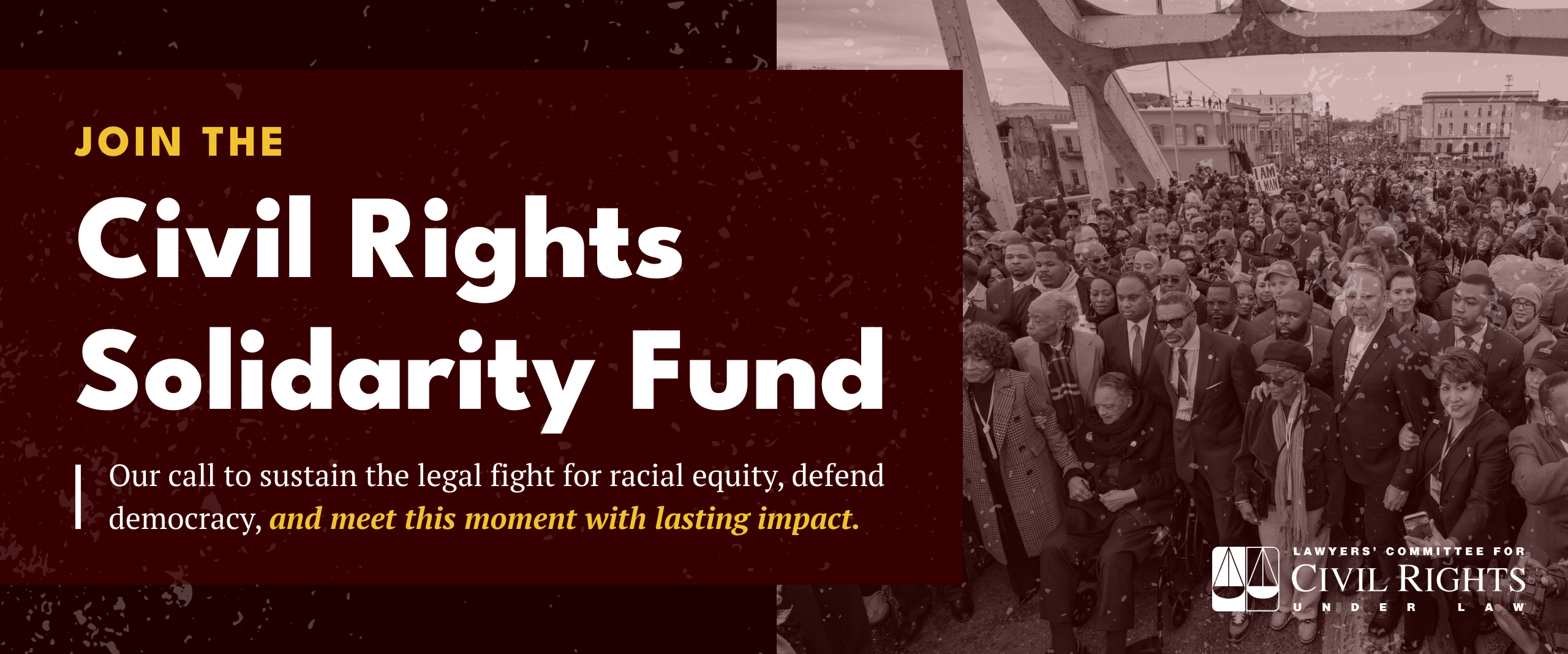
Give today to support voting rights, educational opportunities, digital justice, and to combat hate. Introducing our new Civil Rights and Solidarity Fund, where you can partner with us to meet the moment and help us take strategic action against the dismantling of civil rights.
Every gift is an act of solidarity — and a building block for justice.
Visit Us | Latest News | Donate & Support| Stand in Solidarity
Follow and engage with us online:
LinkedIn | Facebook | Instagram | Threads | Bluesky
The Lawyers’ Committee for Civil Rights Under Law is a nonpartisan, nonprofit organization, formed in 1963 at the request of President John F. Kennedy to mobilize the nation’s leading lawyers as agents for change in the Civil Rights Movement. Today, the Lawyers’ Committee uses legal advocacy to achieve racial justice, fighting inside and outside the courts to ensure that Black people and other people of color have the voice, opportunity, and power to make the promises of our democracy real. The Lawyers’ Committee implements its mission and objectives by marshaling the pro bono resources of the bar for litigation, public policy, advocacy and other forms of service by lawyers to the cause of civil rights.