





Anniversary, Adversity, and Action: Civil Rights in a Defining Moment (Lawyers’ Committee Newsletter June 2025)
June marked a powerful convergence of reflection, celebration, and renewed commitment to civil rights. As we observed ourFounders’ Month and celebrated the 62nd anniversary of the Lawyers’ Committee, we also honored Pride Month, Father’s Day, and Juneteenth—each a vital reminder of the communities we serve and the values we uphold.
The month culminated in our 2025 Annual Founders’ Month Gathering—a celebration of our legacy and a resounding call to action amid growing threats to civil rights, the rule of law, and judicial independence.
June also brought significant Supreme Court rulings that directly impacted the civil rights landscape, with developments affecting voting rights, immigrant justice, higher education, and access to healthcare. While we paused to recognize hard-won victories, we also confronted the long road ahead. Challenges to democracy, birthright citizenship, accessibility, and fundamental freedoms remain urgent and deeply consequential.
As always, the Lawyers’ Committee remains steadfast in our mission: defending civil rights and building a just, equitable, and multiracial democracy.
In this issue, you’ll find key legal updates, recent media highlights, and opportunities to take action. Together, we move the road forward.
The 62nd Anniversary of the Lawyers’ Committee for Civil Rights Under Law
In June, we celebrated Founders’ Month and the 62nd anniversary of our founding (1963–2025). Established at the request of President John F. Kennedy in 1963, the Lawyers’ Committee was formed by a team of the nation’s leading lawyers who united to fight racial injustice and advance civil rights. Over the past 62 years, the Lawyers’ Committee has taken the fight for justice to the courts, to Congress, and to communities—demanding accountability, protecting civil rights, and amplifying the voices of Black people across the country.
Pride Month

In June, we proudly celebrated Pride Month, reflecting on our past and present Diversity, Equity, Inclusion, and Accessibility (DEIA) work and our efforts to maintain, protect, and support LGBTQ+ rights.
Juneteenth
On Thursday, June 19th, we honored Juneteenth—a reminder of resilience, resistance, and the ongoing fight for racial justice. At the Lawyers’ Committee, we remain committed to advancing equity, dismantling systemic racism, and protecting Black freedom.
The Lawyers’ Committee issued a full statement in honor of Juneteenth. Read it here: Lawyers’ Committee Statement on Juneteenth | Lawyers’ Committee for Civil Rights Under Law
Official Statements & Press Releases:
-
Georgia Supreme Court Upholds Block on Hand Counting Rule in Major Win for Voters | June 10, 2025| Read more
-
Civil Rights Organizations Issue Joint Statement on the Los Angeles Immigration Protest | June 10, 2025| Read more
-
National Latino and Civil Rights Groups Denounce Federal Overreach in Los Angeles Raids| June 11, 2025| Read more
-
Lawyers’ Committee Condemns the Arrest and Forced Removal of Sen. Padilla From Today’s DHS Press Conference| June 12, 2025| Read more
-
In Win for Academic Speech, Oklahoma Supreme Court Says Higher Ed is Off-Limits from Censorship Law| June 17, 2025| Read more
-
Lawyers’ Committee Statement on Juneteenth| June 19, 2025| Read more
-
SCOTUS Limits Nationwide Injunctions, Risking Legal Protections| June 27, 2025 | Read more
-
Supreme Court Issues Ruling in Case about a Program that ProvidesBroadband Internet Access to Underserved People | June 27, 2025 | Read more
The Lawyers’ Committee Joins Other Civil Rights Organizations to Condemn Federal Treatment of Peaceful LA Protestors

On June 9th, the Lawyers’ Committee joined in solidarity with other legacy-leading civil rights organizations to condemn the federal government’s decision to deploy the National Guard against peaceful protestors in Los Angeles.
Read the full joint statement signed by the Lawyers’ Committee and seven other national civil rights organizations: Civil Rights Organizations Issue Joint Statement on the Los Angeles Immigration Protest | Lawyers’ Committee for Civil Rights Under Law
Oklahoma Supreme Court Ruling: Higher Ed is Off-Limits from Censorship Law

This past June, the Oklahoma Supreme Court ruled that the state’s 2021 classroom censorship law does not apply to academic speech in higher education, and the decision also helped protect against unnecessary prohibitions on K-12 instruction. As a result, Oklahoma teachers, professors, and students can avoid the governmental censorship of some important academic and historical subjects, including race, gender, and intersectional studies.
“Today’s decision ensures that at colleges and universities in Oklahoma, teachers can teach and students can learn about our country’s history in full – including topics like systemic racism, gender inequality, and LGBTQ+ rights,” said Maya Brodziak, senior counsel with the Educational Opportunities Project at the Lawyers’ Committee for Civil Rights Under Law. “Our country needs to acknowledge and reckon with its history of systemic racism — this includes being able to teach and talk about these concepts in our schools. A prohibition on talking honestly about issues of race and racism hurts all students and society.”
Read the full case details here: In Win for Academic Speech, Oklahoma Supreme Court Says Higher Ed is Off-Limits from Censorship Law | Lawyers’ Committee for Civil Rights Under Law
Learn more: PRESS RELEASE: In win for academic Speech, OK Supreme Court says higher ed is off-limits from censorship law
Georgia Supreme Court Upholds Block on Hand Counting Rule in Major Win for Voters
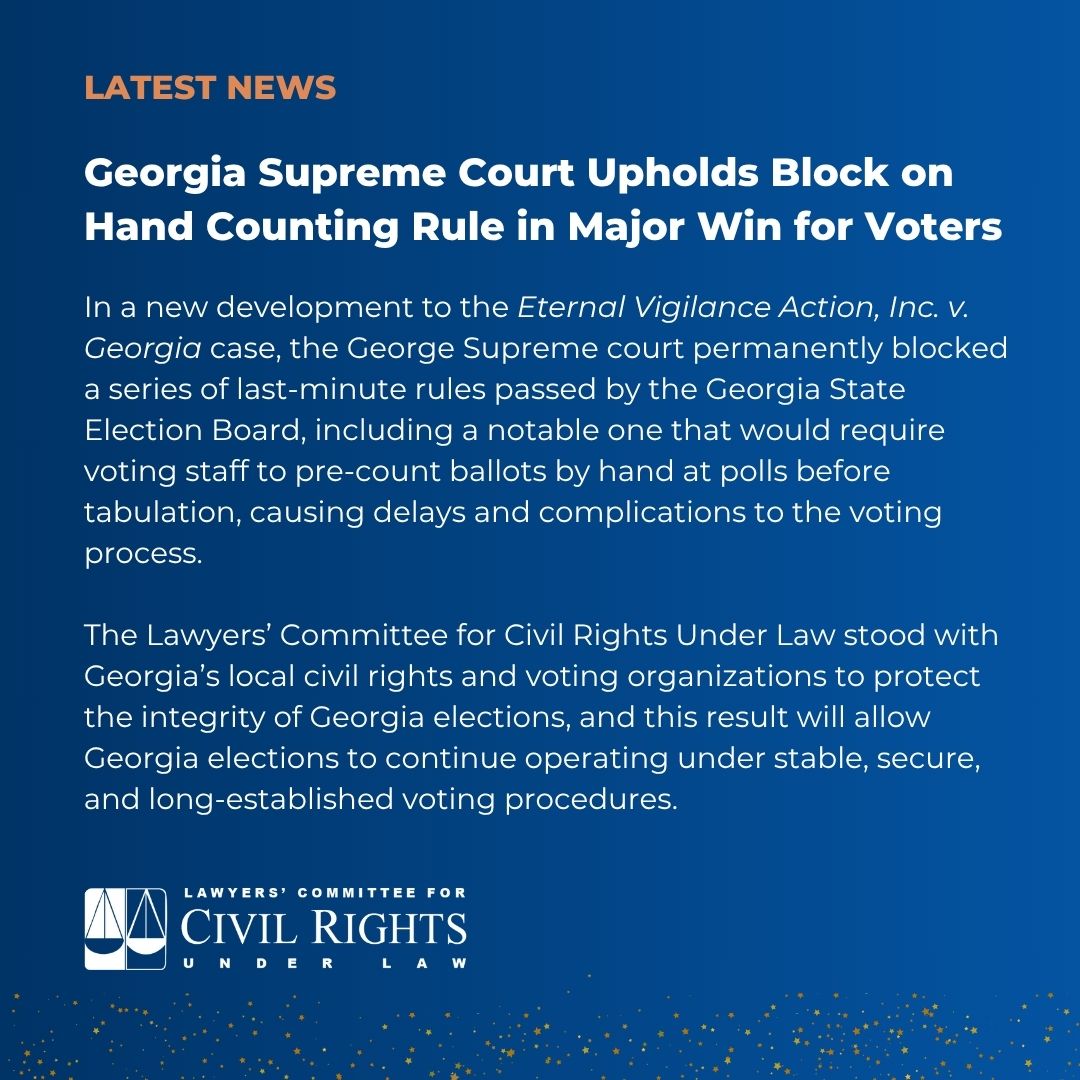
In June, we celebrated the outcome of a new ruling in the Lawyers’ Committee’s Georgia Election case, where we aided in the fight against voter disenfranchisement in Georgia elections.
In this new development, the Georgia Supreme Court permanently blocked a series of last-minute rules passed by the Georgia State Election Board, including a notable one that would have required voting staff to pre-count ballots by hand at polls before tabulation, causing delays and complications to the voting process. The Lawyers’ Committee for Civil Rights Under Law stood with Georgia’s local civil rights and voting organizations to protect the integrity of Georgia elections, and this result will allow Georgia elections to continue operating under stable, secure, and long-established voting procedures.
“The Court’s decision today to block the State Election Board’s ill-conceived Hand Count rule was a victory for Georgia’s voters and goes a long way in helping to ensure that the State Election Board does not overstep its authority in future rule-making that could disenfranchise eligible voters,” said Julie Houk, Managing Counsel for Election Protection at the Lawyers’ Committee for Civil Rights Under Law.
“The Lawyers’ Committee and our clients will continue our work to ensure that Georgia’s Black voters and other voters of color, as well as all eligible Georgia voters, are able to cast their ballots, that they will be counted, and that their fundamental right to vote is not undermined by unauthorized actions taken by members of the State Election Board in the future.”
Read more case details here: Georgia Supreme Court Upholds Block on Hand Counting Rule in Major Win for Voters | Lawyers’ Committee for Civil Rights Under Law
More on Georgia election rules: Supreme Court of Georgia strikes down four state election rules
June Interview Highlight: Lawyers’ Committee Public Policy Director Demelza Baer Talks With WHUR
On June 20, Lawyers’ Committee Public Policy Director Demelza Baer joined WHUR’s Daily Drum program to discuss the protests, political violence, and how the Lawyers’ Committee is meeting the moment.
Watch now: The Daily Drum’s Harold Fisher and the Lawyers’ Committee’s Demelza Baer on WHUR FM
Key Stories Shaping the Legal and Policy Landscape (June Roundup)
This month, critical news emerged around pressing civil rights issues, including forthcoming threats to birthright citizenship, law and democracy, anti-discrimination and equal opportunity, and racial justice. Continued threats to the history and future of civil rights came about this month, making it vital for civil rights litigation and advocacy. Here are some of the key stories from June that are shaping the legal and policy landscape:
The Civil Rights Landscape & Leadership
-
How Trump Upended 60 Years of Civil Rights in Two Months: By targeting these law firms, Trump seems to be trying to kneecap the private civil rights enforcement infrastructure as well. Most of the firms that received Lucas’s letter have partners or other attorneys who sit on the board of the Lawyers’ Committee for Civil Rights Under Law, which was formed in 1963 after President John F. Kennedy convened a meeting of more than 200 lawyers to help defend the rights of Black Americans. Last year, the Paul Weiss firm was recognized for its pro bono work with the organization, including partnering on suits against the white-nationalist groups the Proud Boys and the Patriot Front. Private firms and in-house corporate legal departments have donated more than one million pro bono hours to the Lawyers’ Committee and its clients in the last decade alone. Now Paul Weiss has agreed to do pro bono work for the administration. The capitulation roiled the profession.
“The Lawyers’ Committee got the commitment of America’s most prominent, most powerful law firms to assure fairness and equality through enforcement of civil rights,” says William Robinson, a former executive director of the Lawyers’ Committee. “That’s what Trump is attacking.” Trump, he said, is dismantling the Civil Rights Act “by executive fiat.” The New York Times (June 27)
- City wants feedback on five potential designs for Sadie T.M. Alexander statue: “She attended the University of Pennsylvania, where she became the first Black woman to earn a Ph.D. in economics in 1921. Six years later, she became the first Black woman to earn a degree from Penn’s law school. Alexander served on President Harry Truman’s Committee on Civil Rights and was a founding member of the Lawyers’ Committee for Civil Rights Under Law.” Philly Voice (PA) (June 19)
- Judge Considers Early Release of Martin Luther King Jr. Assassination Documents: Sumayya Saleh, a lawyer representing the Southern Christian Leadership Conference, said that the larger effort was part of a “deliberate effort to undermine the civil rights movement” and to “discredit” Dr. King’s legacy. She said it was far too difficult to define what documents were solely related to Dr. King’s death and that the government was asking the court to defy its own ruling from 48 years ago. New York Times (Nat) (June 4)
Birthright Citizenship
- Is This the End of Birthright Citizenship?: “I spoke with Olivia Sedwick, a counsel at the nonprofit Lawyers’ Committee for Civil Rights Under Law, about what the decision means in practical terms — and why the legal fight over birthright citizenship is far from over.” The Cut (June 30)
-
Trump’s Victory in Birthright Citizenship Puts Him One Step Closer to Being a King: Damon Hewitt, president and executive director of the Lawyers’ Committee for Civil Rights Under Law, said in a statement Friday that when the Supreme Court’s ruling is viewed in full context, it’s clear the decision will only “further enable the Administration’s effort to quash all forms of dissent.”
“The effects of this ruling on marginalized communities—who are already bearing the brunt of this Administration’s policies—will be exacerbated by the White House’s attacks on law firms and nonprofit organizations defending causes the current government disfavors,” he wrote. Hewitt also cited Justice Jackson’s dissent: “If courts do not have the authority to require the Executive to adhere to law universally, compliance with law sometimes becomes a matter of Executive prerogative.” HuffPost (June 27)
Law and Democracy
- With Universal Injunctions Out of Style, Class Actions are Already Trending: Damon Hewitt, president and executive director for the Lawyers’ Committee for Civil Rights Under Law, said the decision will limit access to justice in cases where people are facing violations of their constitutional rights. “In this country, far too many people have no access to our court system because they lack the resources necessary to hire an attorney,” Hewitt said. “And even law firms and nonprofit legal organizations that provide pro bono assistance in complex constitutional cases have done so to make broad impacts that help everyone.” Courthouse News Service (June 27)
- The Senate Holds a Mirror Up to the “Big Beautiful Bill”: “It is a Petri dish [for experimenting] on Black people, and [ultimately] all American people,” believes Damon Hewitt of the Lawyers’ Committee on Civil Rights Under Law (Lawyers’ Committee). His observation may be prophetic as the Senate gears up for its part in the reconciliation of the “Big Beautiful Bill” that Hewitt calls “The Kneecap America Bill.” BlackPressUSA (June 26)
Equal Opportunity & Racial Justice
- Ex-In-N-Out Employee Sues Chain, Alleging Discrimination Over Natural Hair: In 2022, after the CROWN Act was passed by the U.S. House of Representatives, Damon Hewitt, the president and executive director of the Lawyers Committee for Civil Rights Under Law, urged the Senate to pass its own version of the bill to protect Black Americans from discrimination based on their hairstyles at schools and workplaces. Black Enterprise (Nat) (June 22)MSN (June 22)
-
EEOC nominee would likely lead ‘real retreat’ from agency’s civil rights mission: Maya Raghu, a senior adviser to a Democratic EEOC commissioner during the Biden administration, called these cases, known as disparate impact-claims, a “powerful tool that helps uncover and remedy discrimination that isn’t explicit and ensures that everyone has a fair chance to succeed.”
Disparate impact cases are often associated with remedying structural racial discrimination, but can also be related to sex, gender, and disability. The EEOC only had one open disparate impact case, brought about in 2024, challenging hiring policies at Sheetz. The gas station chain screened applicants for criminal convictions, and the agency brought a case due to the disparate impact it had on Black and Indigenous applicants. Earlier this month, the EEOC moved to dismiss the case, citing Trump’s DEI orders. A worker plaintiff has sought private legal counsel to continue the case.
“Eliminating disparate impact cases, or de-prioritizing them, as this administration is saying, would really take us back to a time when employers could impose policies that unfairly deny opportunities to people of color, women, older Americans and other historically excluded groups without really having to provide a business necessity for the policies,” said Raghu, who is now at the Lawyers’ Committee for Civil Rights Under the Law directing a project on advancing diversity, equity and inclusion. Yahoo! News (June 18)
- Discrimination cases unravel as Trump scraps core civil rights tenet: Without disparate impact, the government “would lose a tremendously important tool to remedy civil rights violations that exist and have existed in our country for years,” said Michael Pillera, who worked for a decade at the Office for Civil Rights before leaving in March to become director of the Educational Opportunities Project at the Lawyers’ Committee for Civil Rights. “Disparate impact is designed to give everyone a fair chance to succeed.” Washington Post (Nat) (June 1)
The fight for equity and justice continues, with ongoing legal battles and policy changes shaping the future
Photo Highlights
Annual Founders’ Month Gathering 2025
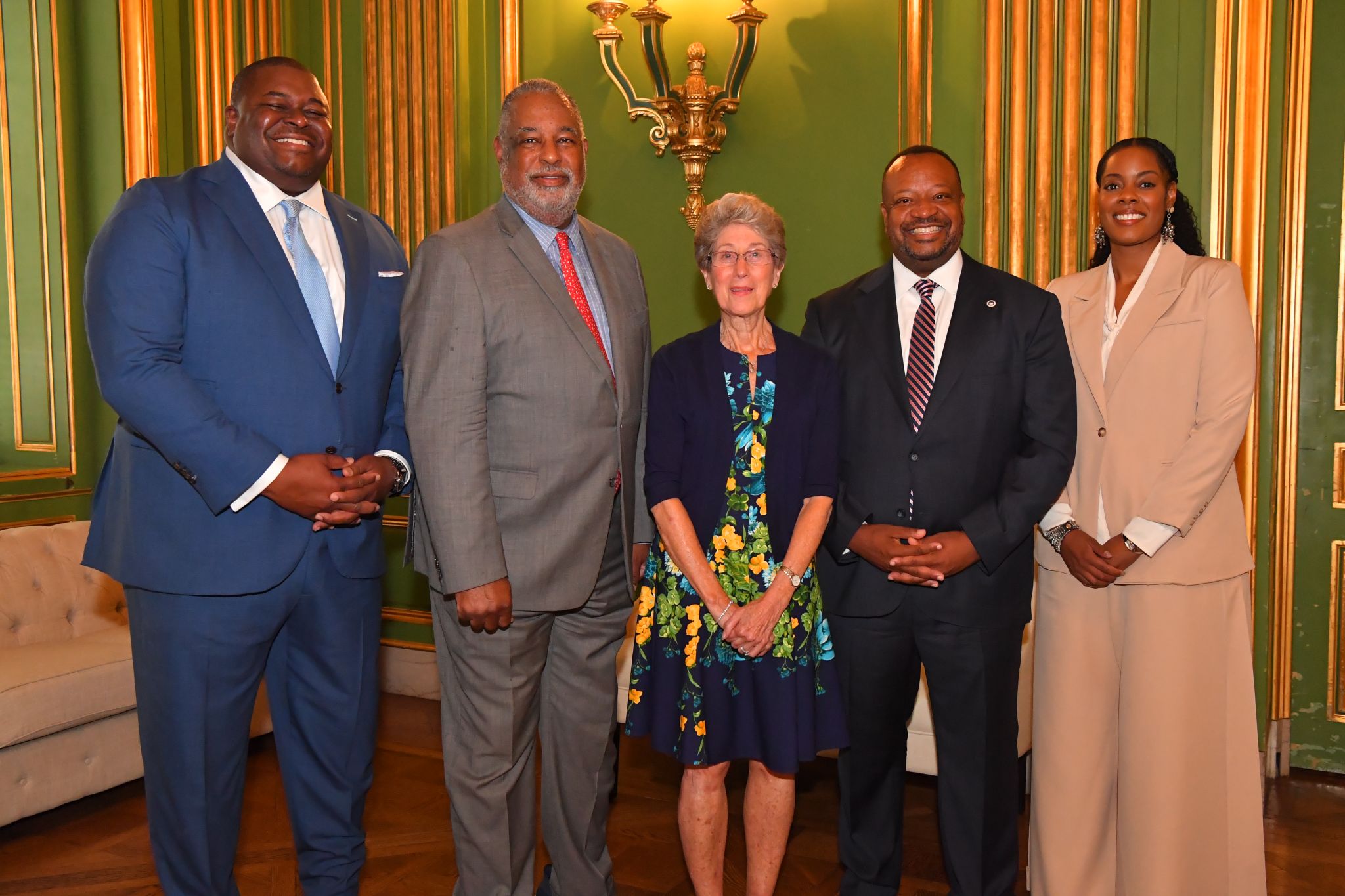
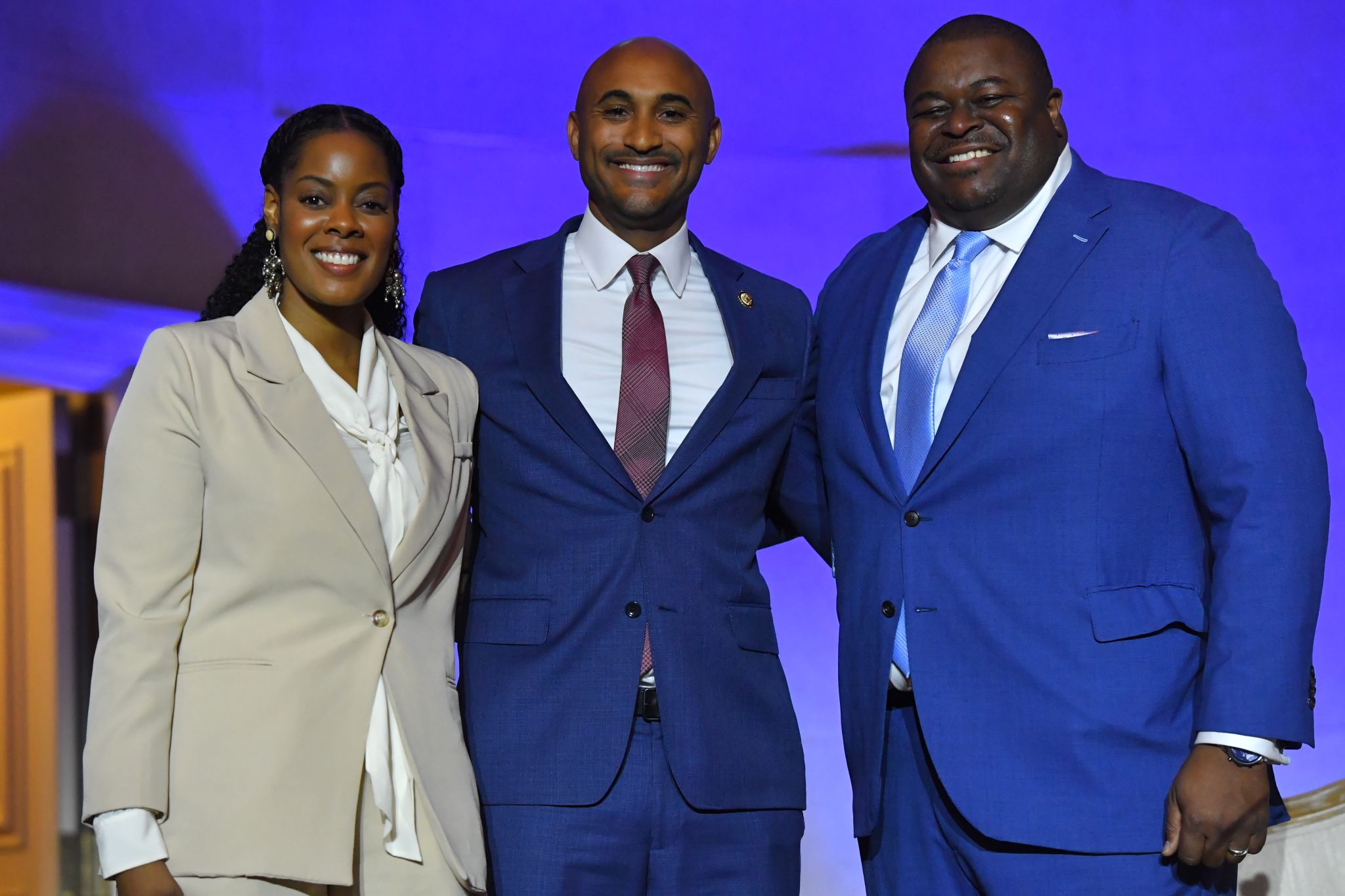
Photo credit: Larry French for AP Images/Lawyers’ Committee for Civil Rights
On June 24, we convened at the historic Andrew W. Mellon Auditorium in Washington, D.C., for our Annual Founders’ Month Gathering 2025: A Call to Consciousness and Action, to honor the founding legacy of the Lawyers’ Committee for Civil Rights Under Law—established in June 1963 at the request of President John F. Kennedy.
The evening featured stirring reflections from former federal judges Hon. Andre Davis and Lawyers’ Committee Executive Board Member Hon. Shira Scheindlin, in a panel conversation hosted by Dean Roger A. Fairfax, Jr. of Howard University School of Law. Special remarks were delivered by Congressman Shomari Figures (AL-02), who was introduced by Shaylyn Cochran, deputy executive director at the Lawyers’ Committee.
As President & Executive Director Damon Hewitt shared, this gathering is more than a celebration—it’s a call to confront the escalating threats to civil rights, the rule of law, and the independence of our judiciary. At a time when democracy faces extraordinary pressure, we convened to reflect, strategize, and renew our commitment to justice.
View our photo gallery here:Founders Month Gathering 2025 | Lawyers’ Committee for Civil Rights Under Law
President and Executive Director Damon T. Hewitt and the Americans United for Separation of Church and State

In mid-June, our President and Executive Director, Damon Hewitt, posed with future litigators after closing out their program with a capstone lecture that left a lasting impact on attendees. We partnered with Americans United for Separation of Church and State for this event, and we thank them for the opportunity to meet with legal advocates and future changemakers. The Lawyers’ Committee is proud to support the next generation working to advance justice and freedom.
Career Opportunities
Come join our team!
Events (July)
In July, we recognize several powerful milestones and observances that reflect our mission and history:
- The 61st Civil Rights Act Anniversary (July 2, 1964)
- Thurgood Marshall’s Birthday (July 2, 1908)
- Independence Day (July 4)
- Disability Pride Month (July)
Together, these commemorations and events shape a powerful month of reflection, pride, and recommitment to justice.
Donate & Support
Give today to support voting rights, educational opportunities, digital justice, and to combat hate. Introducing our new Civil Rights and Solidarity Fund, where you can partner with us to meet the moment and help us take strategic action against the dismantling of civil rights.
Every gift is an act of solidarity — and a building block for justice.
Visit Us | Latest News | Donate & Support| Stand in Solidarity
Follow and engage with us online:
LinkedIn | Facebook | Instagram | Threads | Bluesky
The Lawyers’ Committee for Civil Rights Under Law is a nonpartisan, nonprofit organization, formed in 1963 at the request of President John F. Kennedy to mobilize the nation’s leading lawyers as agents for change in the Civil Rights Movement. Today, the Lawyers’ Committee uses legal advocacy to achieve racial justice, fighting inside and outside the courts to ensure that Black people and other people of color have the voice, opportunity, and power to make the promises of our democracy real. The Lawyers’ Committee implements its mission and objectives by marshaling the pro bono resources of the bar for litigation, public policy, advocacy and other forms of service by lawyers to the cause of civil rights.