





The U.S. Supreme Court today announced that it has vacated and remanded voting discrimination cases from Mississippi and North Dakota to be considered in light of the horrendous Callais decision. In both cases, the Supreme Court was asked to examine the right of individuals to sue under Section 2 of the Voting Rights Act, which was gutted under Callais.
As a result of a lawsuit by the Lawyers’ Committee and other civil rights advocates challenging the state legislature’s district maps in Mississippi for diluting the power of Black people, three new majority-Black districts were created in 2025. In North Dakota, the Turtle Mountain Band of Chippewa Indians, Spirit Lake Nation, and Native American had challenged a redistricting plan that diminished the voting strength of Native American people in North Dakota.
The court has nullified the lower court rulings in the Mississippi and North Dakota cases, sending them back to the lower courts for reconsideration.
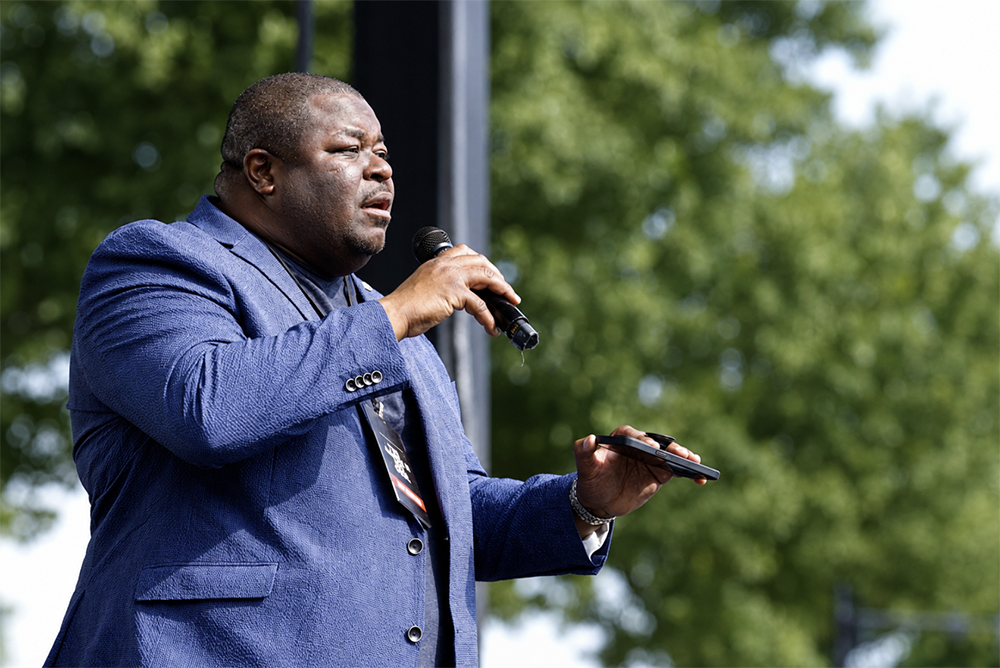
Damon Todd Hewitt, president and executive director of the Lawyers’ Committee for Civil Rights Under Law issued this statement:
“On the heels of one of the most devastating voting rights rulings in decades, the Supreme Court has reached a new low. By vacating a lower court ruling which found that Mississippi’s prior redistricting plan diluted the voice and power of Black voters, the Supreme Court not only did something bad—it did something that was entirely unnecessary. As Justice Ketanji Brown Jackson noted in dissent, the majority ignored the issue that was actually presented in the case and instead went out of its way to once again punish Black voters. That’s not adjudicating the law; that’s playing politics.
Mississippi voters made history when they elected candidates in three new state legislature districts that were created after an extensive trial that showed the state’s redistricting plan diluted the voting strength of Black voters. That is what progress looks like. Yet here we are with the Court erasing people’s votes, silencing their voices, and limiting their efforts to build power.
The Supreme Court’s actions in this case should be a warning to all on multiple fronts. First, the impact of Callais is not limited to congressional races. As the Mississippi case shows, Callais has unleashed a race to discriminate nationwide, injecting chaos into elections at every level across the country. Moreover, it should now be clear to all that this Court will stop at nothing to limit Black political power—even if it means ignoring facts and precedent that seem inconvenient and making up the rules as it goes along.”
Rob Weiner, Voting Rights Project director at the Lawyers’ Committee for Civil Rights Under Law issued this statement:
“In remanding this case for further consideration in light of Callais, the Court gives Mississippi relief it did not even request. The only issue the State presented for the Court’s review was whether private parties can sue for violations of the Voting Rights Act. In sending the case to the lower court for further review of other issues, the Supreme Court confirms once again that the normal rules do not apply when it considers voting rights cases. The Court’s apparent hostility to voting rights, especially the rights of Black people, is wreaking havoc in our Nation’s electoral system.”
Images credit: Butch Dill for AP Images/Lawyers’ Committee for Civil Rights Under Law