- Overview
- Latest Litigation Updates
- Policing
- Indigent Defense/Right To Counsel
- Featured Issues
- Policy & Advocacy
Overview
The Lawyers’ Committee for Civil Rights Under Law established the Criminal Justice Project (CJP) to challenge the racial disparities that persist across the American criminal legal system—disparities that erode due process, entrench systemic inequality, and fuel mass incarceration.
Black and Brown communities, particularly those living in poverty, continue to face unequal justice when the criminal system fails to uphold the Constitution’s promise of fairness and equality. CJP’s mission is to ensure that the criminal legal system delivers on that promise—for everyone.
A System in Crisis
The American criminal legal system fails communities of color in myriad ways. When effective, accountable policing plays a critical role in ensuring public safety, police misconduct and excessive force remain urgent national problems—and they disproportionately harm people of color.
Since the murder of George Floyd in 2020, the number of fatal police shootings has increased each year, reaching record highs. Today, law enforcement fatally shoots more than three people per day in the United States. Black Americans are nearly three times more likely than White Americans to be killed by police.
At every stage of the criminal process, race and poverty intersect to deepen injustice. For example, studies have shown that Black and Latino defendants face significantly higher bail amounts than similarly situated White defendants, making it far more likely that they remain incarcerated before trial simply because they cannot afford release. Once in court, these disparities continue. These inequities persist throughout the criminal process through sentencing. The U.S. Sentencing Commission has found that Black male offenders receive prison sentences that are, on average, about 19% longer than those imposed on White male offenders for similar conduct, even after accounting for factors like criminal history. More recent federal data confirms this trend: between 2017 and 2021, Black men received sentences approximately 13% longer, and Latino men about 11% longer, than comparable White men. Beyond sentence length, Black defendants are also more likely to be sentenced to prison at all when convicted, while wealthier defendants can often avoid incarceration through fines, probation, or diversion programs. Poverty compounds these inequities: people who cannot pay court fines and fees face extended supervision, license suspensions, or even jail time for nonpayment. Together, these disparities reveal a system where both race and wealth heavily determine outcomes, undermining the promise of equal justice under law.
Police Accountability
The Criminal Justice Project (CJP) began its policing work in 2020, focusing on police reform. Our efforts aim to make law enforcement more transparent and accountable to the communities they serve, particularly Black and Brown communities that bear the brunt of misconduct. We challenge unconstitutional practices like excessive force, unlawful arrests, and racial profiling, while also addressing structural issues such as abusive warrant systems and the misuse of surveillance technologies. By holding police departments accountable in court and in the public square, CJP helps communities demand the safe, fair, and constitutional policing they deserve.
Right to Counsel
The Sixth Amendment guarantees the right to counsel, yet across the country this right is under historic threat. Chronic underfunding, flat-fee compensation systems, and mounting caseloads mean that many indigent defendants are represented by overburdened—or sometimes unavailable—attorneys. In federal courts, Criminal Justice Act attorneys have gone months without pay; in state courts, entire counties rely on under-resourced or structurally conflicted defense systems. CJP is working to defend and expand the right to counsel through litigation, advocacy, and partnerships that challenge unconstitutional systems and build models for sustainable, high-quality representation. Ensuring that every person has access to a lawyer is not only a constitutional mandate—it is essential to a fair and just criminal legal system.
Combating Federal Overreach in Policing and Protest Rights
Federal overreach into local policing and First Amendment–protected protest activity undermines fundamental democratic ideals. Heavy-handed federal involvement in community policing undermines local accountability and erodes trust, while attempts to criminalize protest chill the right to free expression. Protecting constitutional freedoms requires vigilance against this federal encroachment: local voices—not federal dictates—must shape the future of public safety, and the right to protest must remain beyond government intimidation or suppression
The Criminalization of Poverty
Across the country, indigent individuals are jailed simply because they cannot afford to pay fines or fees for low-level offenses—a practice that violates basic constitutional protections. Local jails are overcrowded with people arrested repeatedly for poverty-related infractions like writing a bad check, driving without a license, or having lapsed car insurance.
Even juvenile status offenses—like truancy or curfew violations—can carry steep fines and court costs. And with the rapid expansion of community supervision, more than 4.5 million people live under the constant threat of incarceration due to technical violations of probation or parole, including the nonpayment of fines and fees.
Confronting Discriminatory Policing Technology
The rise of technology and artificial intelligence in policing has too often amplified—not reduced—bias. Predictive policing tools disproportionately target communities of color, facial recognition misidentifies Black and Brown people at alarming rates, and automated surveillance expands the reach of over-policing rather than promoting safety. When algorithms reinforce systemic discrimination, they erode trust, violate civil rights, and put constitutional protections at risk. True public safety demands transparency, accountability, and limits on technologies that replicate injustice under the guise of innovation.
Latest Litigation Updates
The Criminal Justice Project uses impact litigation, policy advocacy, and partnerships with community organizers to dismantle the drivers of racial injustice in the criminal system. From challenging police violence to fighting unconstitutional bail practices and defending the right to counsel, CJP is committed to building a more just, equitable, and humane criminal legal system.
FEDERAL OVERREACH INTO LOCAL POLICING AND FIRST AMENDMENT PROTECTED ACTIVITY
Black Lives Matter D.C. v. Trump (Lafayette Square, June 1, 2020) Lawyers’ Committee for Civil Rights Under Law (with co-counsel the ACLU, Washington Lawyers’ Committee for Civil Rights and Urban Affairs, and Paul, Weiss, Rifkin, Wharton & Garrison LLP) litigation highlights a dangerous overreach of federal and local power.
Overview:
On the evening of June 1, 2020, peaceful protesters—among them members of Black Lives Matter D.C.—gathered in Lafayette Square, exercising their First Amendment right to assembly and petition the government following the killings of George Floyd and Breonna Taylor
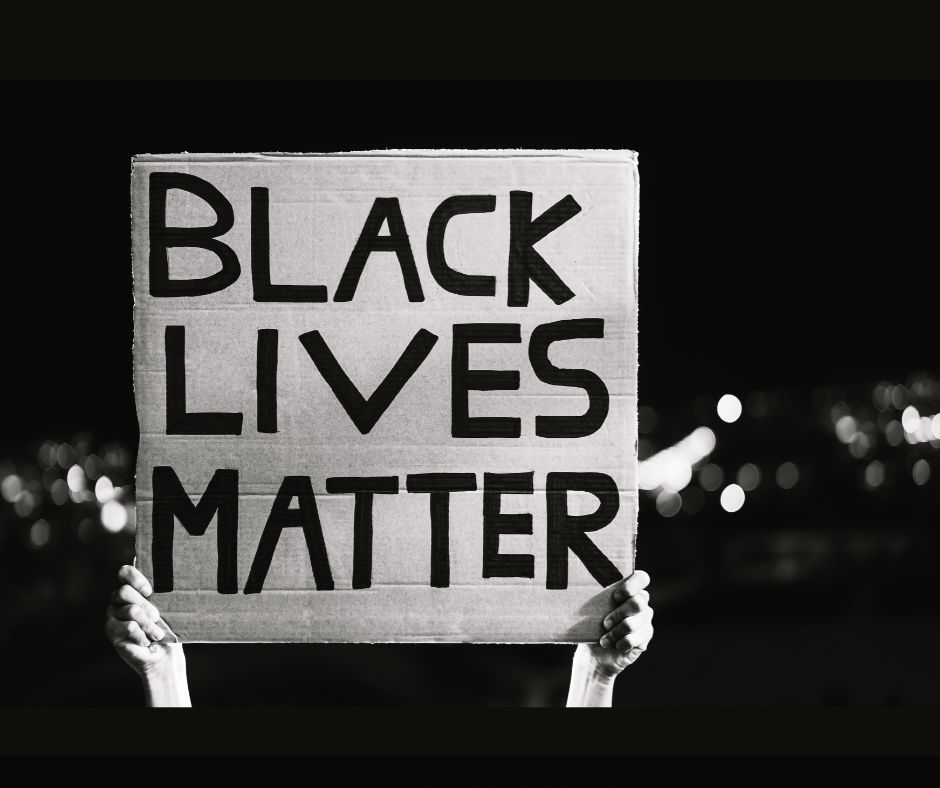
Just before a White House photo op at St. John’s Episcopal Church, law enforcement officers from multiple agencies—including U.S. Park Police, Secret Service, D.C. National Guard, D.C. Metropolitan Police Department, and Arlington County Police—simultaneously deployed tear gas, rubber bullets, and other forceful tactics to clear the area.Plaintiffs allege this was not a legitimate security action but a deliberate effort to silence dissent to facilitate a politically motivated photo opportunityVanity Fair.
Legal Claims:The lawsuit contends that high-level officials—including President Trump, Attorney General Barr, Secretary of Defense Esper, and other federal and local actors—violated demonstrators’ constitutional rights:
- First Amendment rights to free speech and assembly,
- Fourth Amendment protections against unreasonable seizure,
- Conspiracy to deprive civil rights under Section 1985
Latest Developments:
- In March 2025, the court denied the federal government’s motion to dismiss claims under the Federal Tort Claims Act and certified a class action against D.C. police for First Amendment violations through tear-gassing fleeing protesters.
- In April 2022, parties reached a partial settlement, resulting in key policy reforms: U.S. Park Police now must display visible identification; the Secret Service updated its use-of-force and dispersal policies to avoid broad force responses just because some demonstrators may act unlawfully.
- In April 2023, plaintiffs—represented by the ACLU and allied groups—appealed for the right to sue former Trump officials, including Barr and the Park Police incident commander, for redress of their constitutional harms.
Why It Matters:
This litigation underscores that government officials—federal or local—are not above the law, especially when clearing peaceful protesters to serve political optics. The case continues to shape accountability standards, underscore First Amendment protections, and demand transparency in law enforcement conduct.
CRIMINALIZATION OF POVERTY
Too Poor to Pay: How Arkansas’s Offender-Funded Justice System Fuels Mass Incarceration
Lawyers’ Committee for Civil Rights Under Law — Criminal Justice Project released a groundbreaking report in March 2019 exposing how Arkansas’s justice system criminalizes poverty by funding itself on the backs of defendants.
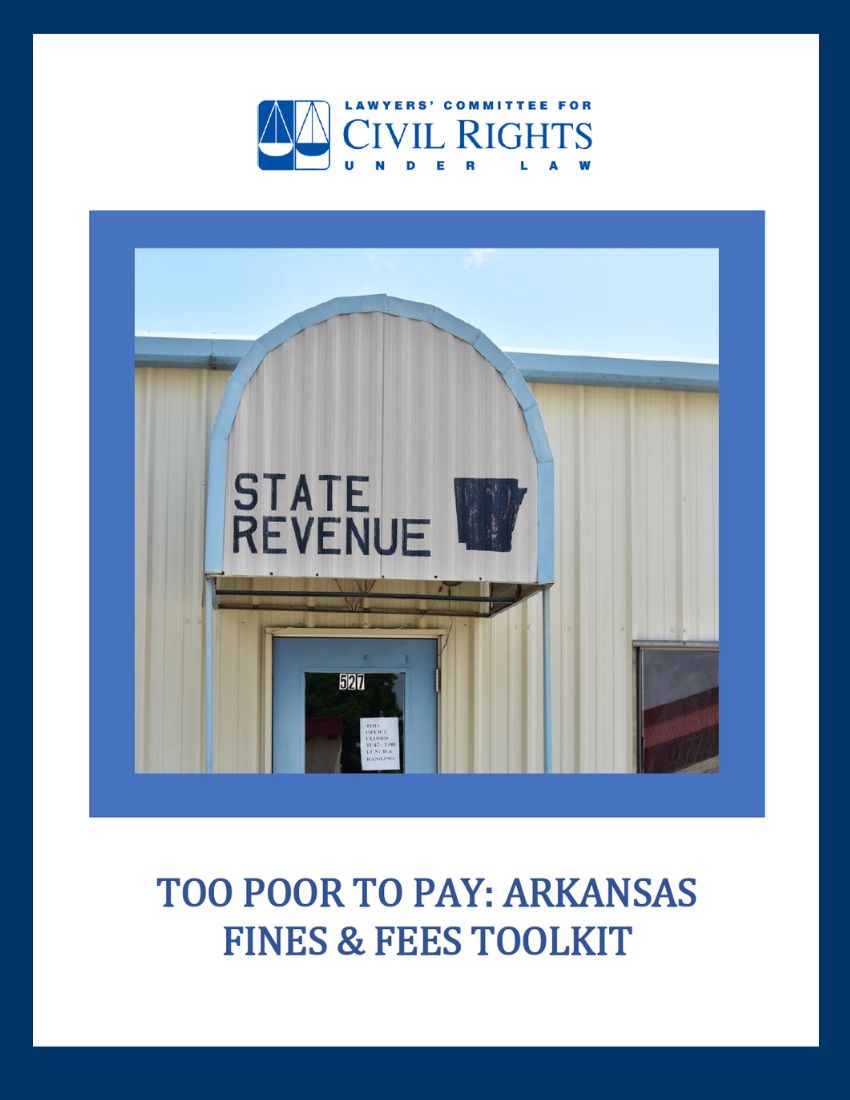
The report, Too Poor to Pay, documents how individuals caught in Arkansas’s criminal legal system face mounting fines, fees, and costs that they cannot afford, creating cycles of debt, incarceration, and re-incarceration. The system’s reliance on “offender-funded” justice forces those least able to pay into impossible choices—between paying court debt or meeting basic needs like rent, food, and medical care.
Key Findings:
- Courts and probation offices across Arkansas systematically impose fines and fees regardless of an individual’s ability to pay.
- People are routinely jailed for failure to pay, in violation of constitutional protections against debtors’ prisons.
- The financial burden falls disproportionately on low-income residents and communities of color, deepening inequality and fueling mass incarceration.
Impact & Toolkit:
The Arkansas Tool Kit accompanying the report provides concrete guidance to advocates, community leaders, and policymakers seeking to reform abusive practices. It offers legal arguments, policy recommendations, and model reforms designed to end wealth-based detention and shift Arkansas away from offender-funded justice.
Why It Matters:
By exposing the hidden costs of a system that punishes poverty, the Lawyers’ Committee equips Arkansas advocates with tools to demand reform, reduce incarceration, and restore fairness to the state’s courts. The report also serves as a national model for challenging “offender-funded” justice systems that exploit vulnerable communities under the guise of public safety.
Policing
Cottman v. Baltimore Police Department — Illegal Property Seizures from Shooting Victims
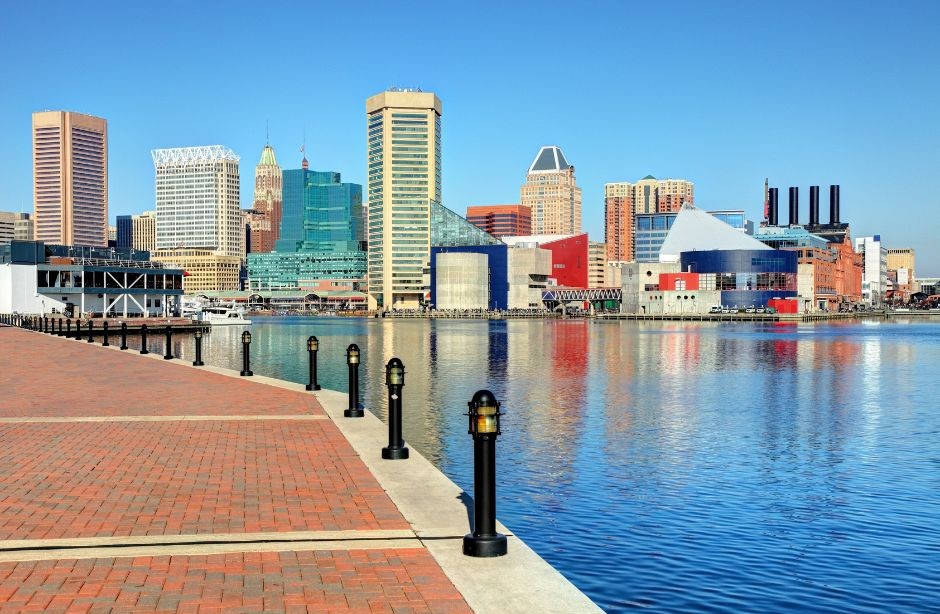
Lawyers’ Committee for Civil Rights Under Law (with co-counsel Orrick, Herrington & Sutcliffe LLP) achieved a landmark settlement with the Baltimore Police Department (BPD) over unconstitutional seizures of personal property from victims of violent crime without warrants or consent.
Overview:
From 2018 to 2021, BPD officers routinely seized personal items—such as phones, clothing, jewelry, and cash—from individuals who had just been shot and were receiving medical treatment, without their consent and without any warrantAmong the plaintiffs was Faye Cottman, who, after protecting her son from gunfire by shielding him, was shot herself. While hospitalized and before receiving medical care, her belongings—including her jacket, phone, wig, and shoes—were taken without consent or documentation. Maryland Daily Record.
Legal Claims & Impact:
The class action, filed in 2021, asserted that BPD’s practices violated the Fourth Amendment by conducting unlawful searches and seizures, and demanded reforms to prevent such abuses. In August 2024, the Baltimore Police Department reached a settlement in the class action lawsuit whose property was seized without warrants and never returned.
Settlement Highlights:
- In August 2024, the settlement was finalized: BPD adopted a new policy governing how officers may seize evidence from shooting victims and implemented mechanisms for victims to reclaim their property. Notices were to be sent to victims in custody with instructions and a retrieval process.
- The agreement also mandates comprehensive training, supervision, and discipline protocols to ensure constitutional compliance in future incidents.
- Additionally, individual relief was provided—named plaintiffs received $10,000 each as part of the settlement.
Why It Matters:
This settlement marks a meaningful victory for victims of police misconduct who were violated at their most vulnerable moments. It compels law enforcement to respect victims’ dignity and due process, and sets a model for cities nationwide to reform harmful practices and better uphold constitutional rights.
Dialogue on Race & Policing:
The community-based project convenes local government, academic, civil rights, and law enforcement leaders for facilitated conversations on the historical and modern-day interplay of race and policing, followed by a working-session to develop recommended actions for improving trust and accountability between police and community residents.
Law Enforcement Data
P.R.O.T.E.C.T. Joint initiative with the National Black Law Students Association launched in response to #LivingWhileBlack complaints, which led to police use-of-force incidents on college and university campuses involving black students and students with mental illness
Indigent Defense/ Right To Counsel
Why Ketanji Brown Jackson’s public defence history matters – The Independent ft. Arthur Ago
Allen v. Edwards (2017) Indigent Defense